
The Red Rainbow Patch
Ka ʻŌnohi ʻula
Nā hiʻohiʻona o ka ʻōnohi ʻula
According to the Hawaiian-English dictionaries, this is the definition of this type of rainbow:[1]
Pukui/Elbert: n., Red eyeball; red rainbow segment; cloud with red hues of rainbow; variety of red tapa; figuratively, fury, anger.
The ʻōnohi ʻula is like the ʻōnohi but it has a majority of red.
Primary trait: A rainbow fragment
Secondary trait: A rainbow associated with a cloud
A rainbow with majority red color
There is an Hawaiian poetical saying about the ʻōnohi ʻula:
"Ōnohi ʻula i ka lani"
"A red eyeball in the sky."
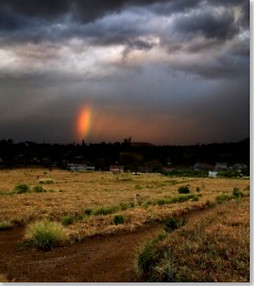
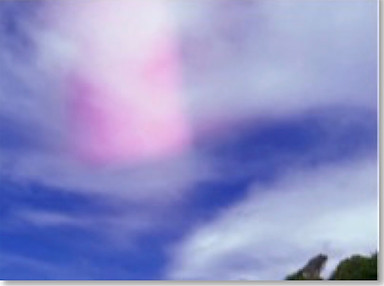
A fragment of a rainbow.
An ʻōnohi ʻula (na Mapio.nei) An ʻōnohi ʻula (na Hoaloha Westcott)
The strata that the ʻōnohi ʻula appear
The strata of the ʻōnohi ʻula are the same as the ʻōnohi, namely, the lewa lani lewa, lewa nuʻu, and the lewa lani.
The times that the ʻōnohi ʻula appear
The times that the ʻōnohi ʻula appear are the same as the ʻōnohi. However the ʻōnohi ʻula often appears when the sun is a Kahikikepapanuʻu (sunrise or sunset).[3]
The signs/omens of the ʻōnohi ʻula
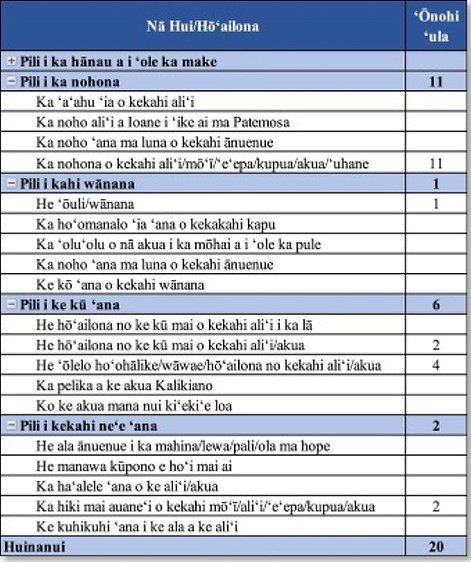
There were 5 signs/omens found within the sources analyzed for the full arching rainbow. There are 20 occurrences of these signs/omens, and the signs concerning a presence were the most numerous (70). The Chi-square goodness-of-fit test was performed on the data, and the result is that the data varies significantly from an equal distribution and therefore one or more of the groups is significantly different than the others from a mathematical perspective. Which group(s)? Perhaps it is the group of signs concerning the residence of a ruler/monarch/extraordinary being or spirit since it is the most numerous.
There are many sisters of the goddess Pele. Hiʻiakanoholani is one of these sisters. The ʻonohi ʻula and the uakoko are her signs.[5]
Translation Key
Examples for each of the signs/omens for the ʻōnohi ʻula are shown on the Hawaiian pages and are not available in English at this time.
[1] Wehewehe Wikiwiki. n.d. Ke Kulanui o Hawaiʻi ma Hilo. https://hilo.hawaii.edu/wehe/. (Pukui/Elbert).
[2] Mary K. Pukui. (1983). ʻŌlelo Noʻeau. Honolulu, HI: Bishop Museum Press. #2522, ʻaoʻao 275
[3] David K. Lynch and William Livingston. 1995. Color and Light in Nature. Cambridge: Press Syndicate of the Unversity of Cambridge. ʻaoʻao 106.
[4] ʻO ka hopena o ka hōʻike haʻihelu hoʻoili: χ2 (3, n = 20) = 12.4, p < 0.01. No laila, hōʻole ʻia ke kuhiakau kūpapa.
[5] ʻAʻole ʻike ʻia ka mea kākau. (1908). "Ka Mooleo Kaao o Hiiaka-i-ka-Poli-o-Pele." Kuokoa Home Rula, Ianuari 24: 1.

na Hoaloha Westcott